
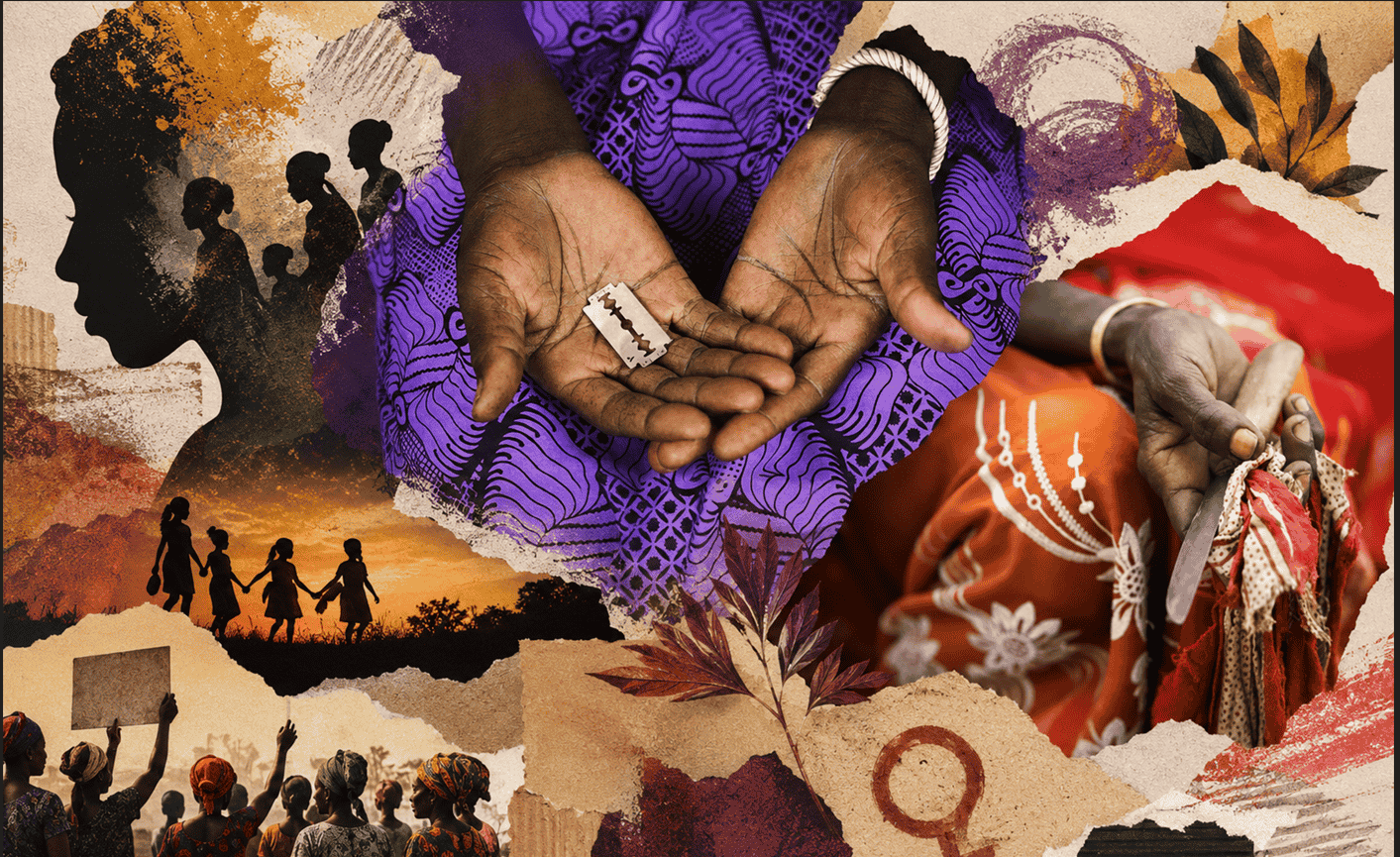
The World Health Organisation (WHO) has announced that Female Genital Mutilation (FGM) prevalence in Ebonyi had dropped to 20.4 per cent in 2026, down from 74 per cent, describing the progress as a major milestone in efforts to eliminate the practice in the state.
Speaking at the Ebonyi Women’s Leadership Summit on FGM in Abakaliki on Wednesday, WHO Representative Douglas Ogbueli said the UN health agency would continue to support the state until the practice is completely eradicated.
The summit, organised by the United Nations Population Fund (UNFPA) and the Better Health for Rural Women, Children and Internally Displaced Foundation (BERWO), brought together government officials, traditional rulers, religious leaders, women’s groups, survivors and development partners to strengthen action against FGM.
The wife of the Ebonyi State Governor, Mary-Maudline Nwifuru, declared zero tolerance for female genital mutilation, directing local government officials to ensure the practice is eliminated across communities.
She also urged lawmakers to intensify public enlightenment campaigns and strengthen enforcement of existing laws banning the practice.
UNFPA Resident Representative Muriel Mafico commended Ebonyi’s progress, expressing confidence that sustained interventions could reduce prevalence to zero.
A consultant gynaecologist, Johnson Obunanna, described FGM as a gross violation of the rights of women and girls, urging traditional and religious leaders to sustain advocacy and community mobilisation against the practice.
Ebonyi State’s sharp decline in the prevalence of female genital mutilation (FGM) is emerging as one of Nigeria’s strongest examples of how sustained political commitment, community engagement and enforcement of anti-FGM laws can reduce one of the country’s most entrenched harmful traditional practices.
While Ebonyi’s achievement offers hope, Nigeria continues to shoulder one of the heaviest global burdens of female genital mutilation.
According to UNICEF and UNFPA, Nigeria has nearly 20 million women and girls living with the consequences of FGM, the third-highest number worldwide, noting that although national prevalence among women aged 15–49 has declined from 18 per cent to 15 per cent, the country remains far from achieving the Sustainable Development Goal of eliminating FGM by 2030.
The 2021 Multiple Indicator Cluster Survey (MICS) found that approximately 15 per cent of Nigerian women aged 15-49 have undergone FGM, while prevalence among girls aged 0-14 has fallen to 8 per cent, reflecting gradual national progress.
However, UNICEF notes that 86 per cent of Nigerian women who experienced FGM were cut before the age of five, making infancy and early childhood the period of greatest risk.
Despite the national decline, prevalence remains significantly higher in several southern states, indicating that progress has been uneven across the country.
WHO explained that Ebonyi’s progress resulted from years of coordinated interventions involving the state government, traditional rulers, religious institutions, civil society organisations, health workers, and community volunteers.
The strategies that led to the decline included sustained community dialogues challenging cultural beliefs supporting FGM; engagement of men, traditional rulers and religious leaders as advocates; stronger enforcement of the Ebonyi Violence Against Persons (Prohibition) Law, which criminalises FGM; survivor-centred advocacy and public awareness campaigns; school and youth education programmes; and collaboration between government agencies and development partners.
UNICEF has previously highlighted how male champions, community leaders and local institutions in Ebonyi helped shift long-standing social norms that sustained the practice, contributing to the state’s steady decline in prevalence.
Although Nigeria enacted the Violence Against Persons (Prohibition) Act in 2015 and many states have since adopted similar legislation, enforcement remains inconsistent, while cultural acceptance continues to drive the practice in several communities.
For Nigeria to meet its commitment to end female genital mutilation by 2030, experts argue that states with persistently high prevalence will need to replicate the kind of coordinated, community-driven approach now showing measurable results in Ebonyi.