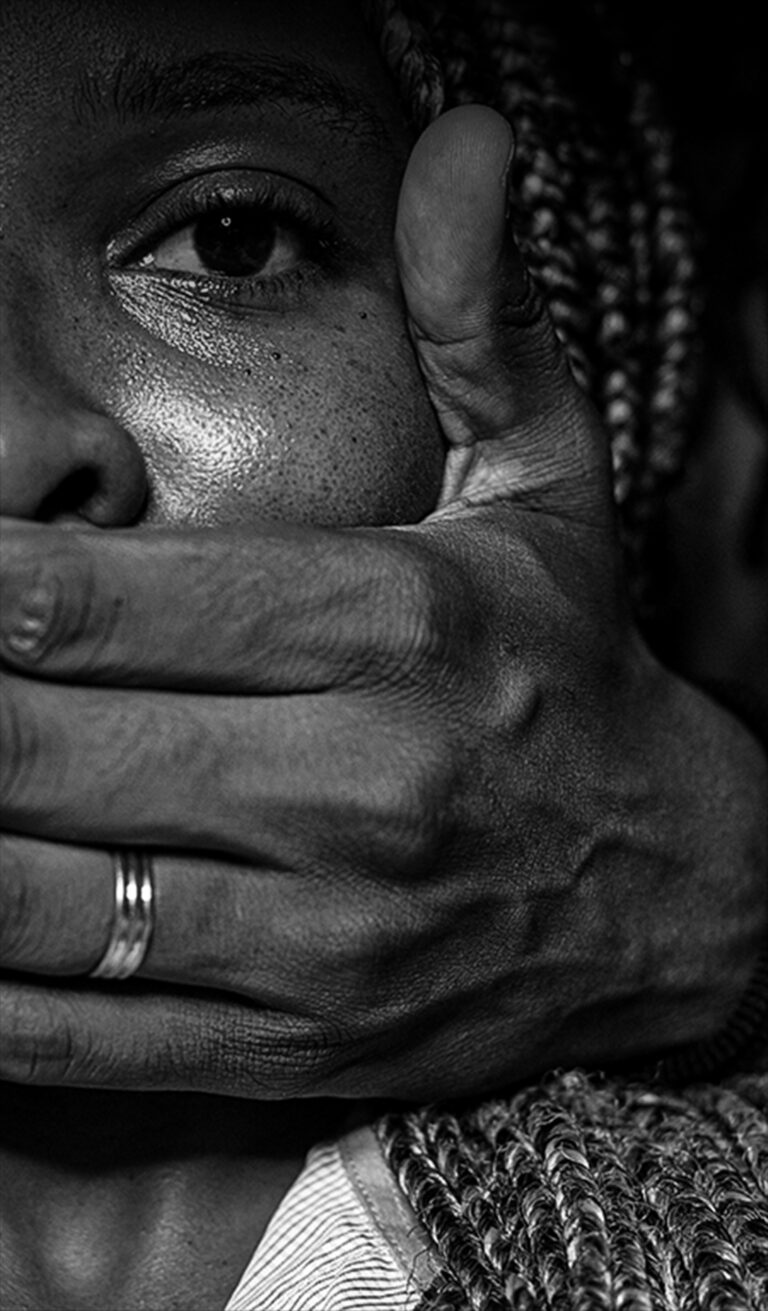
The National Human Rights Commission (NHRC) has received more than 600 human rights complaints in Borno State in the past six months, with domestic violence accounting for the highest number of reported cases.
The NHRC’s Borno State Coordinator, Jummai Mshelia, revealed this in an interview with the News Agency of Nigeria (NAN) on Thursday, noting that the cases ranged from domestic violence and child abuse to rape, sexual exploitation, human trafficking, forced marriage, unlawful detention, kidnapping and child abandonment.
“Many victims previously considered domestic violence a private family matter and were reluctant to speak out. Today, more people are willing to report such cases because they trust the commission and believe they can get justice,” she said.
Mshelia said the growing number of complaints reflected increasing public confidence in the commission’s ability to provide justice rather than simply indicating a rise in abuse.
No operational budget for NHRC
A review of the 2026 Appropriation act by Gender Rights, NHRC Commission received a N20 billion allocation with no operational or capital funding in its 2026 budget, raising questions about how the country’s foremost rights watchdog is expected to investigate abuses in one of its most conflict-affected states.
The N20 billion allocation was classified as salaries, with zero allocation for overhead and zero capital expenditure, meaning that the Commission officially has no budgetary provision for transportation to crime scenes, field investigations, monitoring detention facilities, electricity, communications, litigation support, office maintenance, public enlightenment campaigns or the day-to-day running of its state offices.
Similarly, the absence of capital funding means there are no allocations for operational vehicles, office rehabilitation, computers, digital case-management systems or other infrastructure needed to investigate complaints.
The anomaly is particularly striking when compared with other agencies under the Federal Ministry of Justice.
As the the Federal Ministry of Justice Headquarters received N10.5 billion in overhead and N9.7 billion for capital projects, while the Legal Aid Council received N2.99 billion in overhead and N343 million in capital expenditure.
The Nigerian Institute of Advanced Legal Studies was allocated N328 million for overhead and more than N3.1 billion for capital projects.
By contrast, the NHRC received no operational or capital funding despite its constitutional mandate to investigate human rights violations nationwide.
The development comes against the backdrop of continuing humanitarian and protection crises in Nigeria’s North-East that has displaced millions across Nigeria’s North-East and left women and children particularly vulnerable to violence, exploitation and abuse.
According to the International Organization for Migration (IOM), more than 3.7 million people remain displaced across Nigeria’s north-east and north-west, with Borno accounting for the largest share of internally displaced persons due to over a decade of Boko Haram and ISWAP violence, noting that displacement has consistently increased the risks of gender-based violence, child exploitation and trafficking as families struggle with poverty and disrupted livelihoods.
The United Nations Office for the Coordination of Humanitarian Affairs (OCHA) have repeatedly warned that women and children bear the greatest burden of protection risks, including sexual violence, forced marriage, family separation and child labour.
Domestic violence tops rising abuse complaints
Mshelia said domestic violence remained one of the most frequently reported violations handled by the commission.
She attributed the trend partly to sustained public awareness campaigns that have encouraged survivors to seek help instead of suffering in silence.
Beyond domestic abuse, the commission also recorded numerous cases involving child neglect, abandonment and maltreatment.
She linked the growing number of vulnerable children on the streets to poverty, prolonged displacement, inadequate parental care and family breakdown caused by years of conflict.
According to UNICEF, the insurgency in the North-East has exposed millions of children to grave violations, including recruitment by armed groups, sexual violence, abduction, psychological trauma and the disruption of education.
UNICEF has consistently warned that prolonged displacement leaves children at heightened risk of exploitation, abuse and trafficking.
The NHRC coordinator urged parents and guardians to prioritise their children’s welfare, education and emotional well-being, warning that neglect increases the likelihood of children ending up in street begging and other hazardous survival activities.
She said many complaints received by the commission had been resolved through mediation and alternative dispute resolution, while cases requiring criminal investigation were referred to the Nigeria Police Force and the Ministry of Justice for prosecution.
Mshelia reaffirmed the commission’s commitment to ensuring justice for survivors, urging residents to promptly report violations and reminding the public that all NHRC services are free.
However, she warned that the commission’s ability to respond swiftly to complaints is being hampered by inadequate logistics.
“The major challenge affecting our operations is the lack of operational vehicles,” she said, noting that the shortage limits the commission’s capacity to investigate complaints and reach vulnerable communities across Borno’s vast and often insecure terrain.
Human rights advocates have long argued that strengthening institutions such as the NHRC is critical to improving access to justice in conflict-affected states, where survivors often face significant barriers in reporting abuse and obtaining legal redress.